Why the joints are cut by hand
Mortise and tenon, half lap, dowel — what each one is doing in the work, and why it is worth the extra bench time.
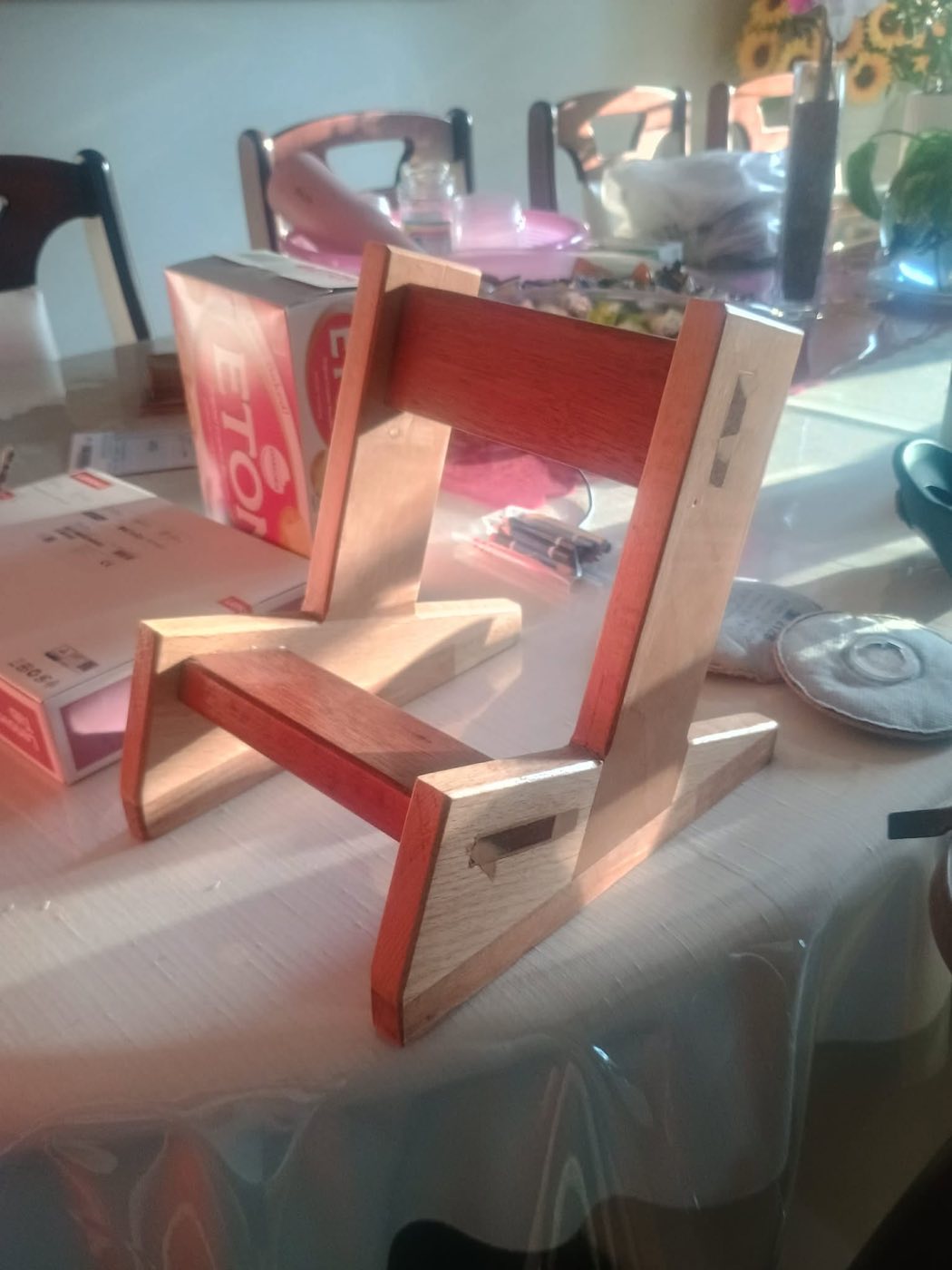
A machine-cut joint is faster to make and it will hold. A hand-cut one is slower, and the reason to do it anyway is that it can be fitted to the timber in front of you rather than to a jig.
The workshop stool is a fair example. The rails are let into the legs with mortise and tenon joints, dowelled to one another and again up into the seat top. That is a lot of separate joints for a small piece, and each one is cut to the leg it belongs to.
The book stand is the same idea at a different scale — beech in a half-lap arrangement, jarrah rails on hand-cut mortise and tenons, and teak runners underneath that were left over from another job.
Hand-cut joints take longer. Every piece is quoted with its own timeline.
Enquire about a commission